Technologies and Intellectual Property

SPY Imaging Technology

Leveraging the integration of a sophisticated laser, high-speed imaging and a fluorescing agent with a strong record of safety, Novadaq's SPY imaging technologies produce angiographic images that correlate to x-ray. SPY Imaging technology utilizes the properties of  a well known fluorescent compound that absorbs light in the near infrared (NIR) region at 806 nm, and emits light at a slightly longer 830nm wavelength. When the fluorescence agent is administered either intravenously or intra-arterially, it rapidly and extensively binds to plasma proteins and  is confined to the intravascular compartment with minimal leakage into the interstitium making it an ideal agent for the acquisition of high quality images of the vascualture and microvasculature. 
SPY technology makes use of an 806 nm laser, projected through unique optics to illuminate a targeted area of interest in the the body and to cause the agent to fluoresce. Fluorescence occurs nearly immediately and dissipates such that mutiple images may be acquired during procedures. The fluorescence images are captured by a charge coupled video camera, sensitive in the NIR and equipped with the appropriate optical filters to block transmission of the laser light while efficiently passing the fluorescence light.

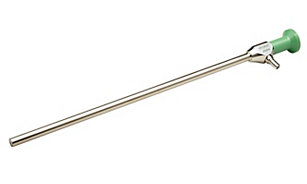
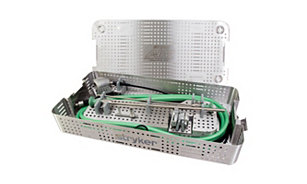
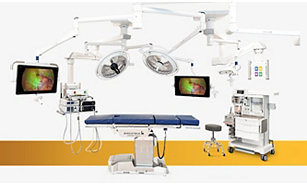
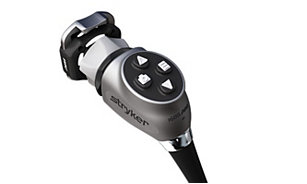
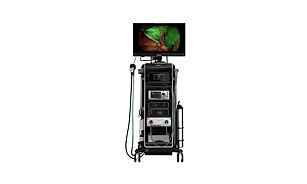
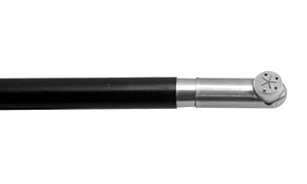
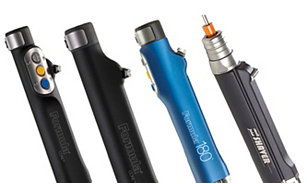
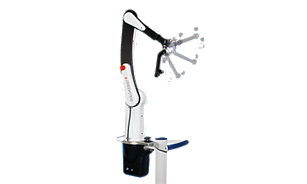
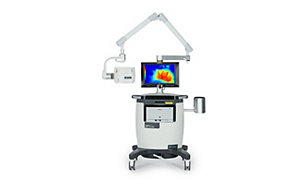
SPY technology is FDA cleared for use in coronary artery bypass, cardiovascular, plastic, reconstructive micro and organ transplant surgery. It is currently marketed as the SPY Imaging System for open surgery, and the endoscopic SPY Imaging System for minimally invasive surgery. SPY Imaging technology is the subject of the technology alliance between Novadaq and Intuitive Surgical, Inc. The companies are working together to incorporate SPY imaging into the da Vinci Surgical Robotic System.

PINPOINT Autofluorescence Endoscopic Technology

PINPOINT autofluorescence technology enables physicians to quickly and accurately distinguish between healthy and unhealthy tissue and  to detect cancerous tissue at stages earlier than any other technology available on the market. In 2007, the American College of Chest Physicians (ACCP)  made several recommendations related to autofluorescence including that it  should be used as an adjunct to white light during bronchoscopy. Novadaq sees the potential to expand the use of PINPOINT into the colon, bladder, uterus and other hollow organs.

Autofluorescence is fluorescence that is excited in and emitted from epithelial tissue when exposed to light in the visible spectrum (400-700nm). Autofluorescence occurs without the use of an exogenous contrast agent. When illuminated by blue light, endogenous or naturally occurring fluorophores such as college, elastin and NADH in the tissue absorb and then emit light in wavelengths of red and green. The emitted light provides information about the subsurface properties of the tissue.

Lung cancer - severe dysplasia:

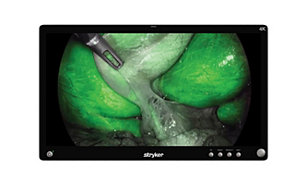
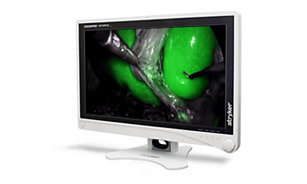
Structual changes that occur as tissue progresses from healthy to unhealthy, such as the thickness of the layers, increased vasculature and biochemical differences like changes in the number and type of fluorophores, will affect fluorescence. Healthy tissue emits green light or “fluorescence”, but as tissue progresses from healthy to abnormal, the intensity of the green light diminishes. PINPOINT autofluorescence technology captures, processes and displays the contrasting autofluorescence signal to assist physicians in discriminating between healthy and diseased tissue in real time.

PINPOINT autofluorescence was first FDA approved for use in bronchoscopy. Prior to approval, PINPOINT demonstrated a 325% per-lesion improvement in the detection of early lung cancer and a 250% per-patient improvement compared to white light alone in an international multi-centre clinical trial. 

Patents

Novadaq aggressively pursues intellectual property protection for its innovations, products and core imaging technologies in all significant markets around the world. The company's current IP portfolio includes a total of over 100 patents including, 48 granted patents and multiple pending patent applications representing over 40 distinct patent families. Issued patents and pending applications continuously serve as a foundational platform for a wide array of future applications. In addition, strategic alliances and joint ventures with universities, research organizations and industry partners have resulted in mutually beneficial licensing agreements, opportunities and rights to valuable intellectual property.
Trademarks

Novadaq takes all active steps afforded under international intellectual property laws to protect and prevent unauthorized use of its valuable trademark assests. The company's current portfolio includes both unregistered and registered trademarks filed with the United States Patent and Trademark Office and the Canadian Intellectual Property Office.

The trademarks used in association with Novadaq's medical devices and instrumentation, device components or consumables help establish the unique identity of the Company's products and processes in the healthcare industry and consumer marketplace.Trademarks which are also extensively used in clinical protocols, clinical registries, promotional, advertising, insrtuctional and reference materials further strengthen the corporate and brand identity of the Company.